Blink
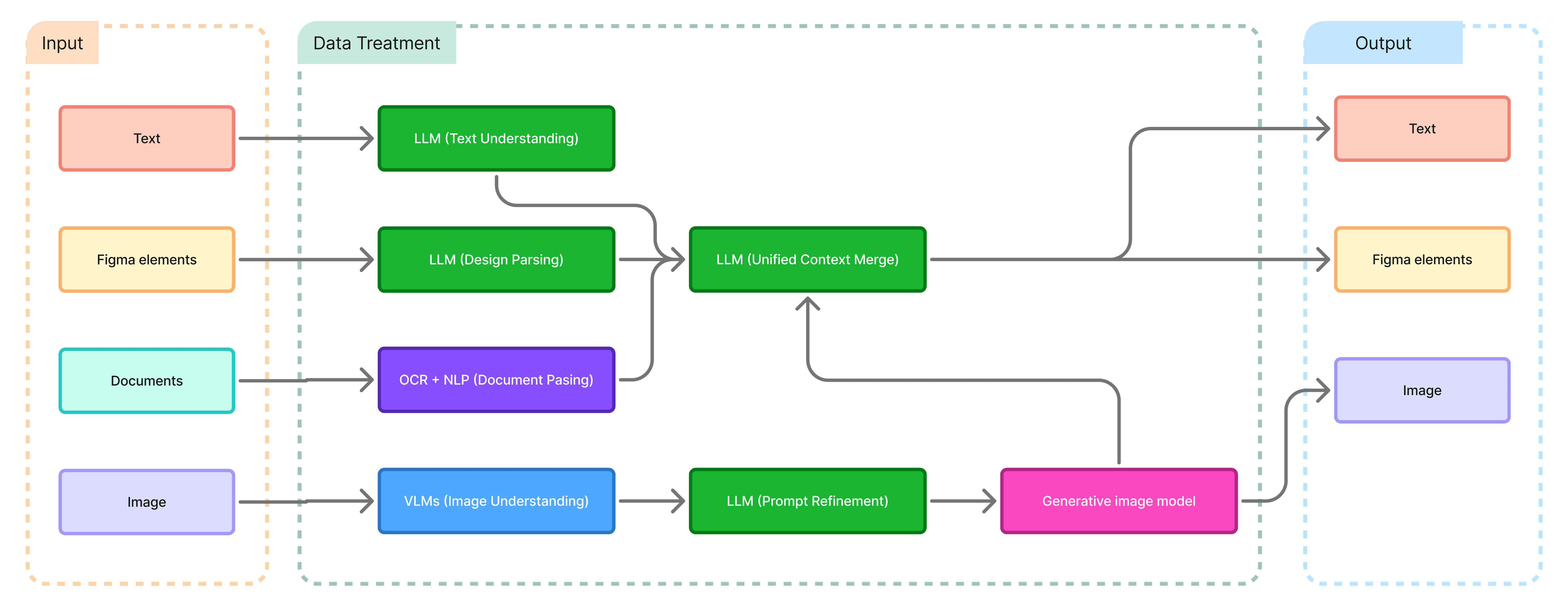
An AI-powered Figma plugin that can facilitate the ideation process by helping designers generate concepts and visualize ideas to sketches.


My Role
My Role
My Role
UX Designer
UX Researcher
Responsibility
Responsibility
Responsibility
User Research
UI Design
Wireframing
Prototyping
Team
Team
Team
Individual Project
Duration
Duration
Duration
2025/5-2025/8
10 weeks
The Problem
UX designers juggle large number of abstract ideas, and the time-consuming visualization process. They need a better way to ideate without losing context or creative freedom.
The Problem
UX designers juggle large number of abstract ideas, and the time-consuming visualization process. They need a better way to ideate without losing context or creative freedom.
The Solution
A Figma plugin that supports ideation by interpreting concepts and visualize them into contextual, wireframe-ready sketches to save time and align with creative flow.
The Solution
A Figma plugin that supports ideation by interpreting concepts and visualize them into contextual, wireframe-ready sketches to save time and align with creative flow.
Final Outcome
Final Outcome
Final Outcome
Final Outcome
Final Outcome
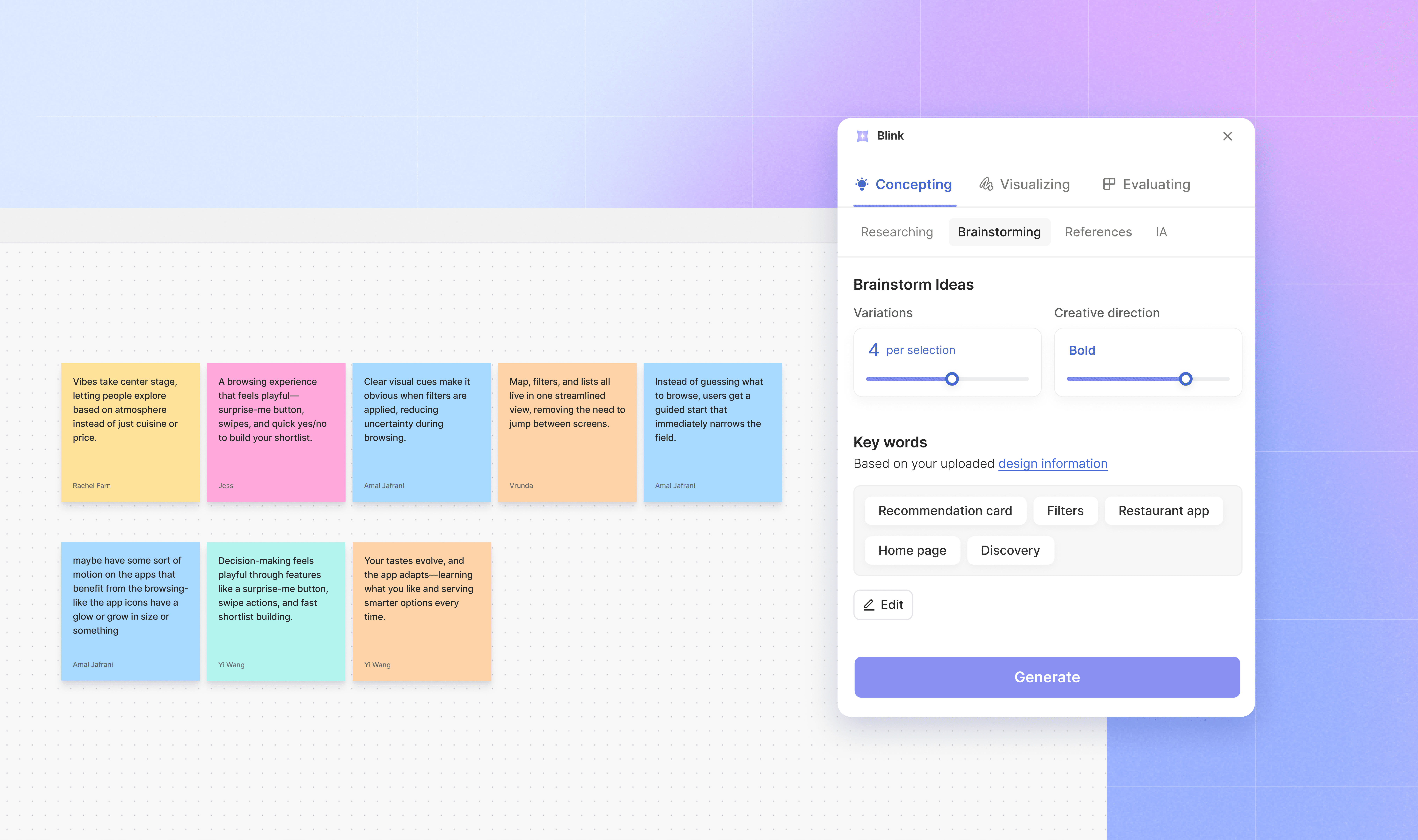
Flow 01- Concepting I
Turns research and early ideas into clear sparks for direction.
An interactive and immersive discovery experience.
Flow 01- Concepting II
Shapes concepts into references and structured IA.
Flow 02- Visualizing
Converts abstract ideas into quick, usable wireframes.
Flow 03- Evaluating
Improves designs with smart checks and testing simulation.
LTE Track - Daily Use of the Connection Point
A dynamic and easy-to-use connection point.
The Process
The Process
The Process
The Process
The Process
It started from a chat.
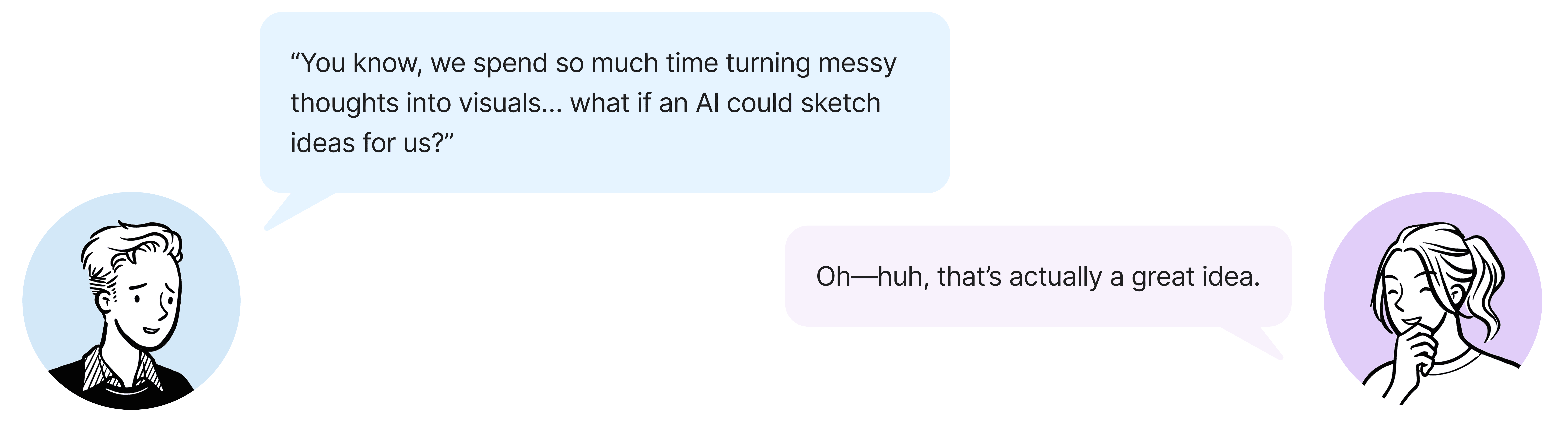
This idea grew out of a conversation with a colleague, during one of our frequent brainstorming sessions at the creative design studio where I interned.


User Research
Then I also interviewed other student designers and industry professionals, focusing on two parts:
User Research
Then I also interviewed other student designers and industry professionals, focusing on two parts:
User Research
Then I also interviewed other student designers and industry professionals, focusing on two parts:
User Research
Then I also interviewed other student designers and industry professionals, focusing on two parts:
User Research
Then I also interviewed other student designers and industry professionals, focusing on two parts:
Focus 01
What is their current ideation process?
Understanding where AI can add the most value and make the best impact.
Focus 02
How is their experience with AI tools?
Understanding what AI features users might expect or resist.
01: What is their current ideation process?
Design workflows differ from person to person, but generally move from text concepts to visuals, then refinement.
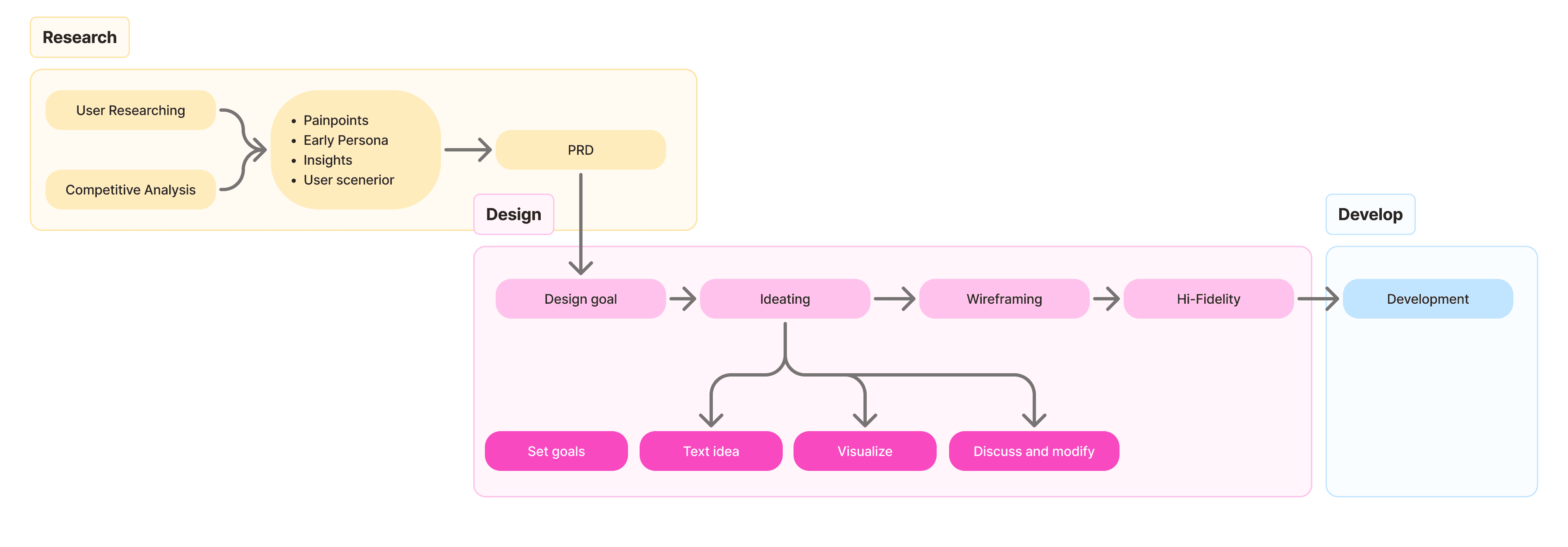
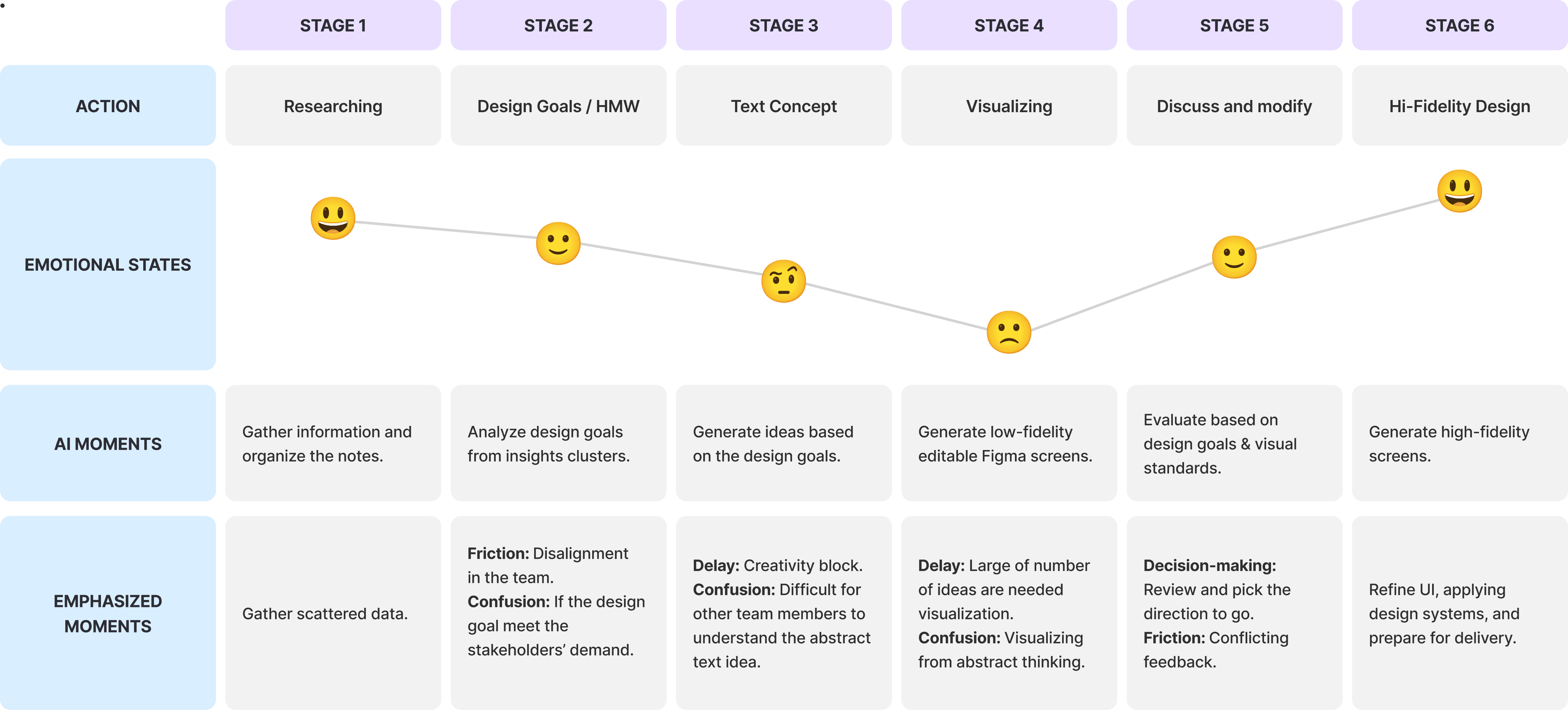
Also, I found out some general painpoints during the ideation process.


Painpoint 01
Brainstorming text concepts
Lack of inspiration or creative block.
Hard for other team members to understand the text idea.
Painpoint 02
Visualizing concepts
Large of number of ideas needed to be visualized
Visualizing user flow from abstract thinking.
Also, I found out some general painpoints during the ideation process.

Painpoint 01
Brainstorming text concepts
Lack of inspiration or creative block.
Hard for other team members to understand the text idea.
Painpoint 02
Visualizing concepts
Large of number of ideas needed to be visualized
Visualizing user flow from abstract thinking.
02: How is their experience with AI tools?
Unfortunately, interviewees tend to think AI is hard to help in the process due to the following reasons:
02: How is their experience with AI tools?
Unfortunately, interviewees tend to think AI is hard to help in the process due to the following reasons:
72%
AI output is hard to control and often unpredictable.
53%
Feel inefficient and cognitively overloaded when chatting with AI.
67%
Lack creative direction or inspiration to explore bolder concept.
81%
Hard to do further modification on the AI output.
72%
AI output is hard to control and often unpredictable.
53%
Feel inefficient and cognitively overloaded when chatting with AI.
67%
Lack creative direction or inspiration to explore bolder concept.
81%
Hard to do further modification on the AI output.
Competitive Analysis
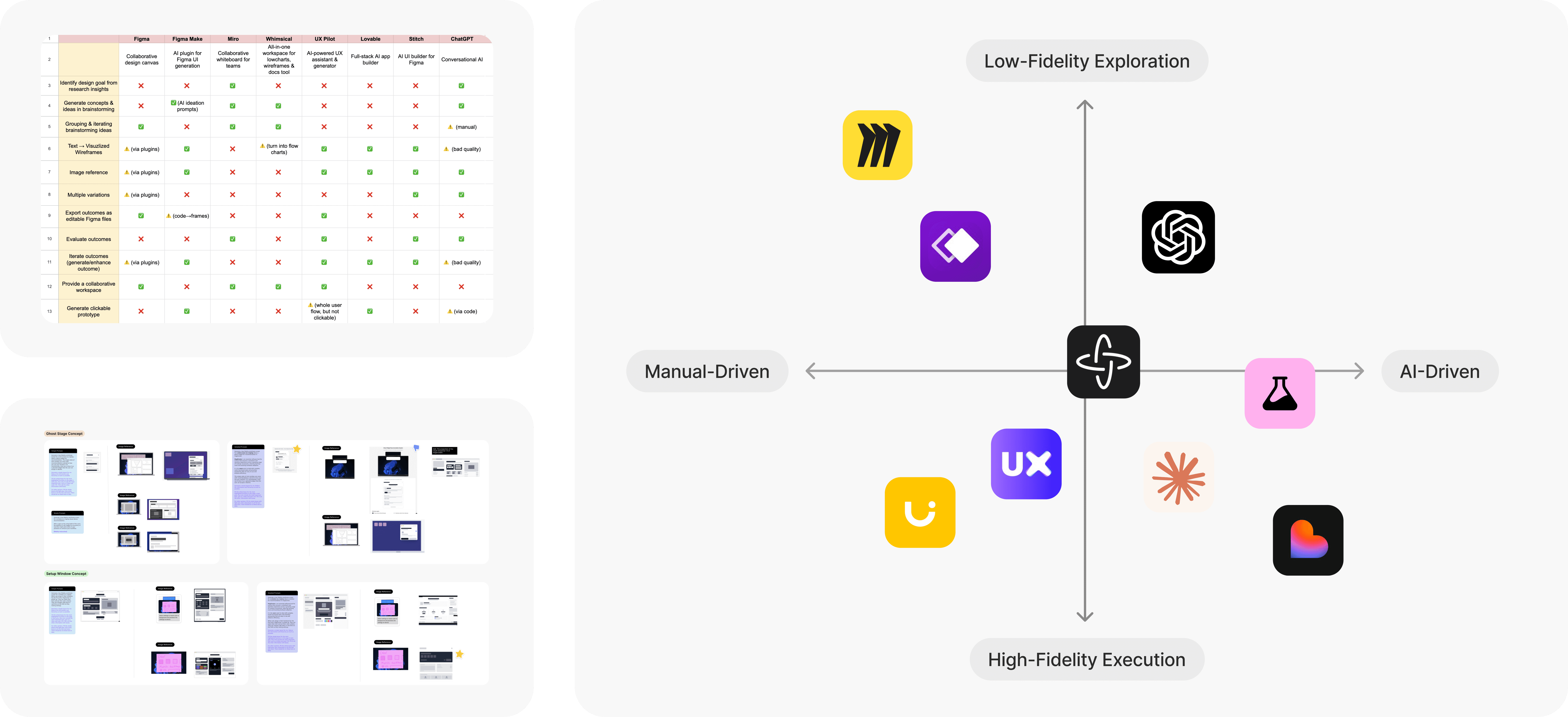
I also audited multiple UI visualization tools, comparing their features and output.
Competitive Analysis
I also audited multiple UI visualization tools, comparing their features and output.
Competitive Analysis
I also audited multiple UI visualization tools, comparing their features and output.
Competitive Analysis
I also audited multiple UI visualization tools, comparing their features and output.


Competitive Analysis
I also audited multiple UI visualization tools, comparing their features and output.

They have the problem of:
Focused on hi-fi generation but weak in creative wireframe exploration.
Missing design context inputs, leading to off-target results.
Outputs aren’t directly editable and require extra importing into Figma.
They have the problem of:
Focused on hi-fi generation but weak in creative wireframe exploration.
Missing design context inputs, leading to off-target results.
Outputs aren’t directly editable and require extra importing into Figma.
Product Goals
From this, I set the following goals for the product:
Product Goals
From this, I set the following goals for the product:
Product Goals
From this, I set the following goals for the product:
Product Goals
From this, I set the following goals for the product:
Accelerate full-stack iteration from concept to evaluation.
Seamlessly integrate into the real-world design flow.
Making decisions without losing context.
Use feature-based AI functions to streamline workflow.
Product Goals
From this, I set the following goals for the product:
Accelerate full-stack iteration from concept to evaluation.
Seamlessly integrate into the real-world design flow.
Making decisions without losing context.
Use feature-based AI functions to streamline workflow.
Design Iteration
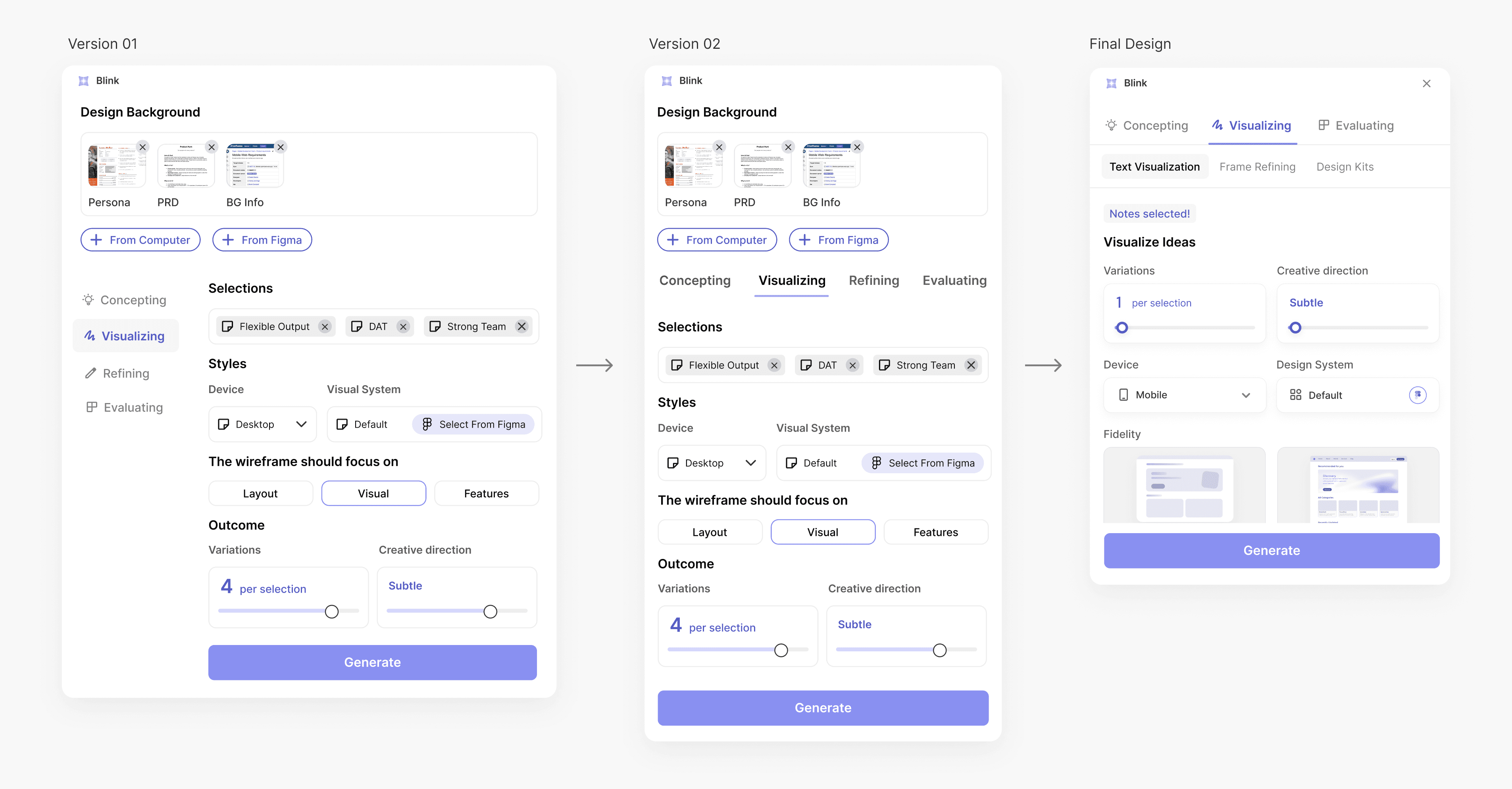
How to pack complex features into a minimal layout?
Design Iteration
How to pack complex features into a minimal layout?
Design Iteration
How to pack complex features into a minimal layout?
Design Iteration
How to pack complex features into a minimal layout?
Design Iteration
How to pack complex features into a minimal layout?


Change the horizontal layout to vertical layout, to leave more space to design
Hide the design backgrounds.
Concentrate the functions.

Change the horizontal layout to vertical layout, to leave more space to design
Hide the design backgrounds.
Concentrate the functions.
Branding
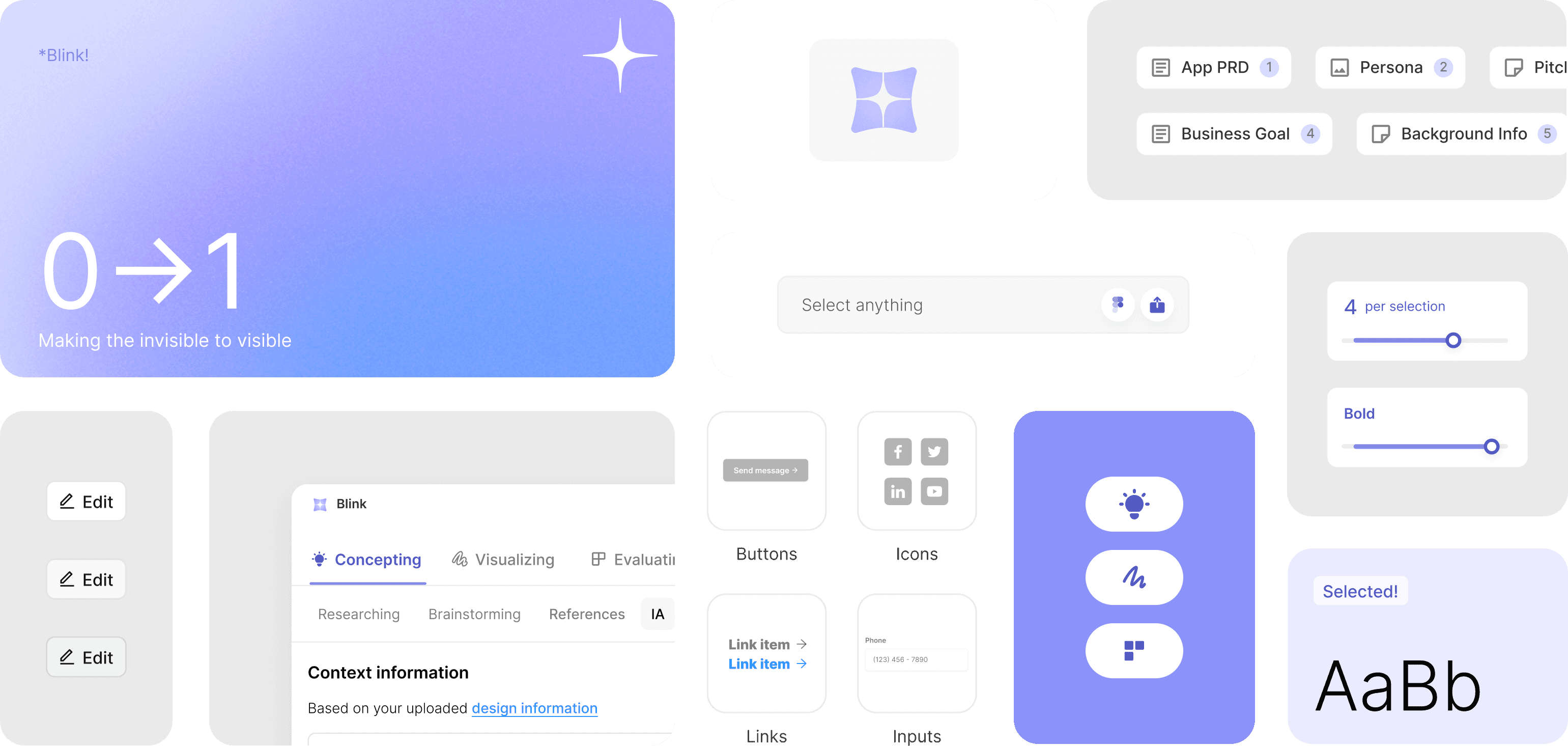
Instant, Creative, Magical
I branded Blink to convey a sense of inspiration and clarity, and designed the spinning animation to reflect the spark of ideas and the brand’s imaginative identity.
Takeaways
Takeaways
Takeaways
Takeaways
Takeaways
What I learned
Better understanding on the current AI tools on market.
Organize complex functions in a limited space.
Next Step
Prototype the core function out
Extend beyond Figma to other design platforms.